E.A. Williams & Son Brass & Bell Foundry
The History
The E. A. Williams & Son Bell and Brass Foundry was established in Jersey City, New Jersey, in 1857 and became an important American producer of bells and nonferrous castings. The company was founded by William Williams, a Welsh immigrant who came to the United States in 1847. Williams was a highly skilled brass founder, melter and molder who developed a reputation for producing difficult castings. In 1857, he entered into partnership with a relative named Conkey and established a brass foundry in Jersey City. William Williams died only a few years later, however, leaving behind his widow and a sixteen-year-old son, Thomas.
Following her husband's death, Eliza Ann Williams took control of the foundry. Remarkably, Eliza was not simply the proprietor of the business; she was herself experienced in the foundry trade and was capable of making molds, melting metal and pouring castings. Operating an industrial business as a woman during the 1860s presented considerable challenges, and Eliza reportedly concealed her gender in business correspondence and contracts by signing her name simply "E. A." It was from her initials that the company received the name by which it would become known for generations: E. A. Williams & Son.
Eliza Ann continued to operate the foundry until 1867, when her son, Thomas H. Williams, was old enough to assume its management. Under Thomas, the business grew into a substantial brass and bronze foundry producing bells and a wide variety of specialized castings. Government and maritime work became an important part of the company's business. During the Civil War era, the foundry produced bronze castings for the famous ironclad USS Monitor, and in later years its work could be found aboard ships, submarines and other vessels. Thomas H. Williams remained at the head of the company until his death in 1907, after which the business continued under his son, Thomas H. Williams Jr., representing the third generation of the Williams family.
E. A. Williams & Son became particularly well known for its association with the United States Navy. During the early twentieth century the company supplied numerous ship's bells, and surviving examples bearing the Williams name remain important artifacts of American naval history. Known vessels receiving Williams bells included the USS New Hampshire in 1907, USS Arizona and USS Pennsylvania in 1916, USS Mississippi in 1917, USS New Mexico in 1918, USS Tennessee in 1920, and USS Maryland in 1921. During World War I, Thomas H. Williams was called to Washington because of his expertise in nonferrous casting and reportedly assisted in developing specifications that became standards for bells used by the Navy aboard ships and at shore installations.
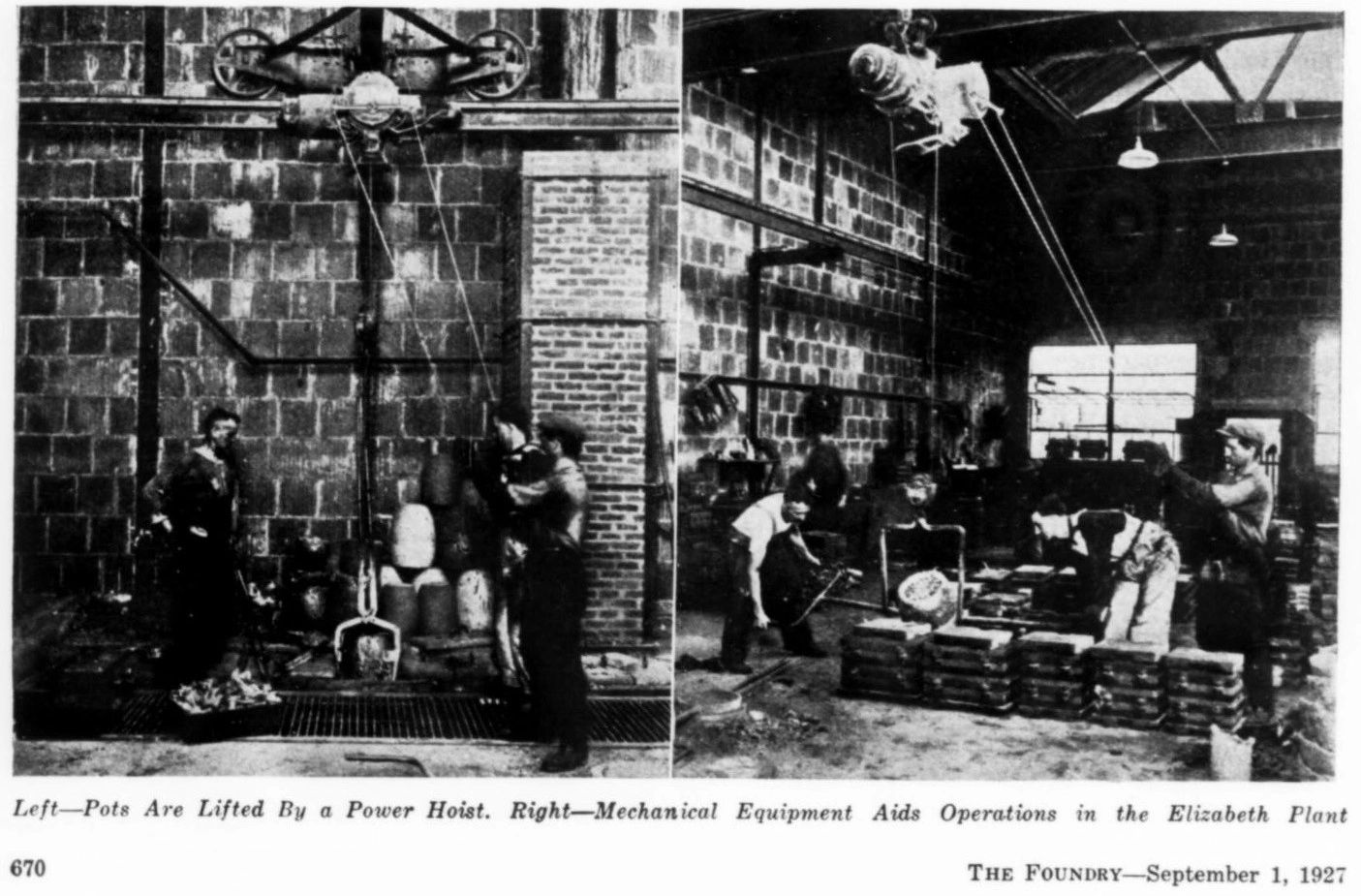
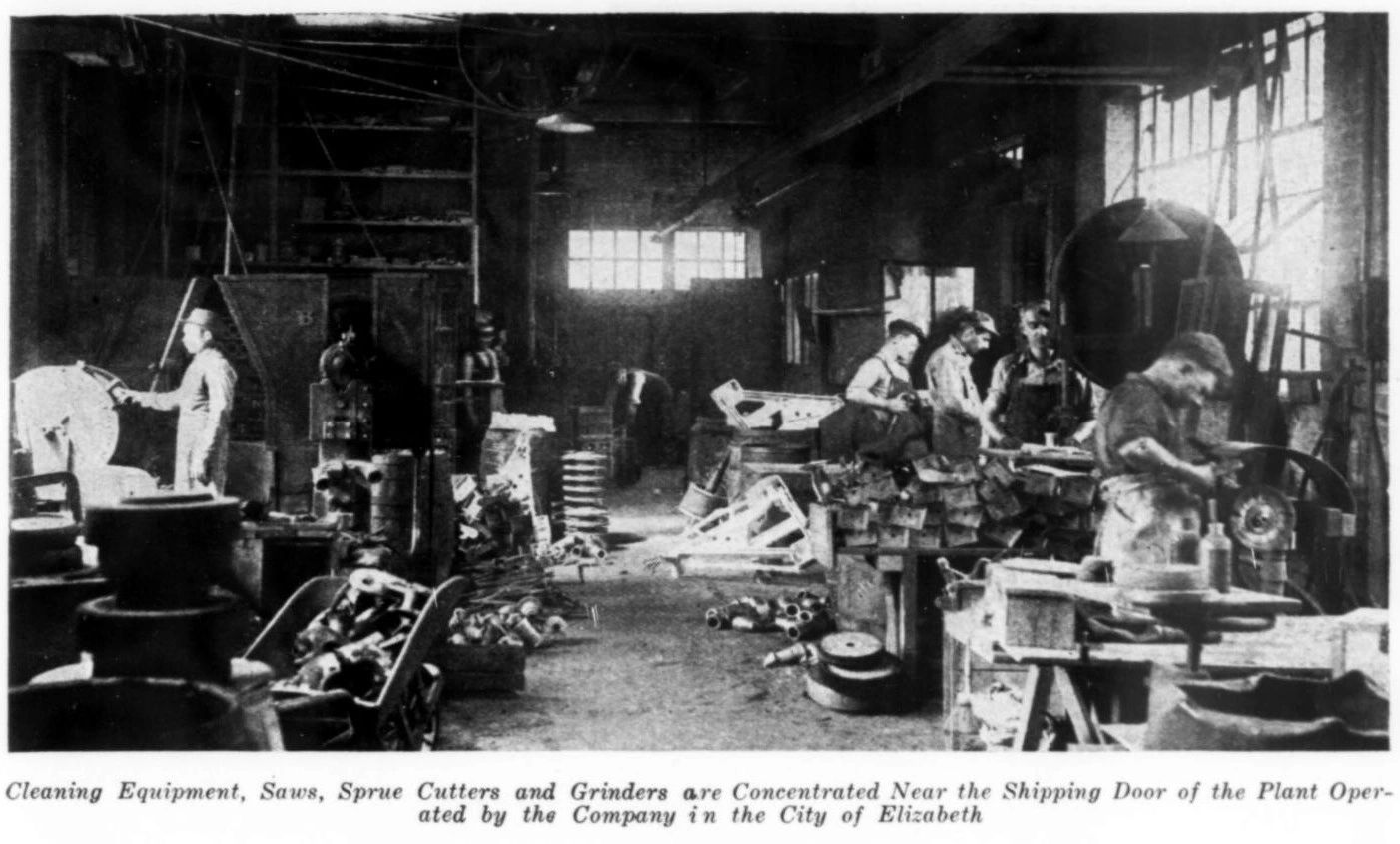
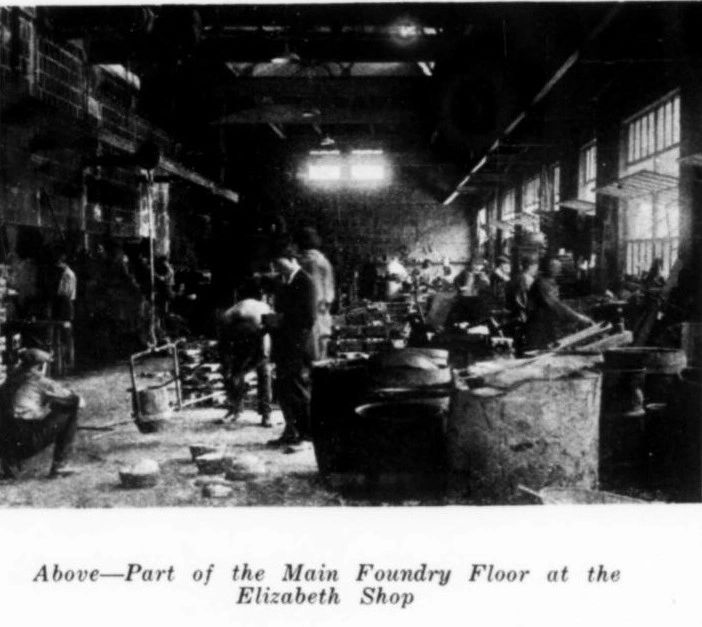
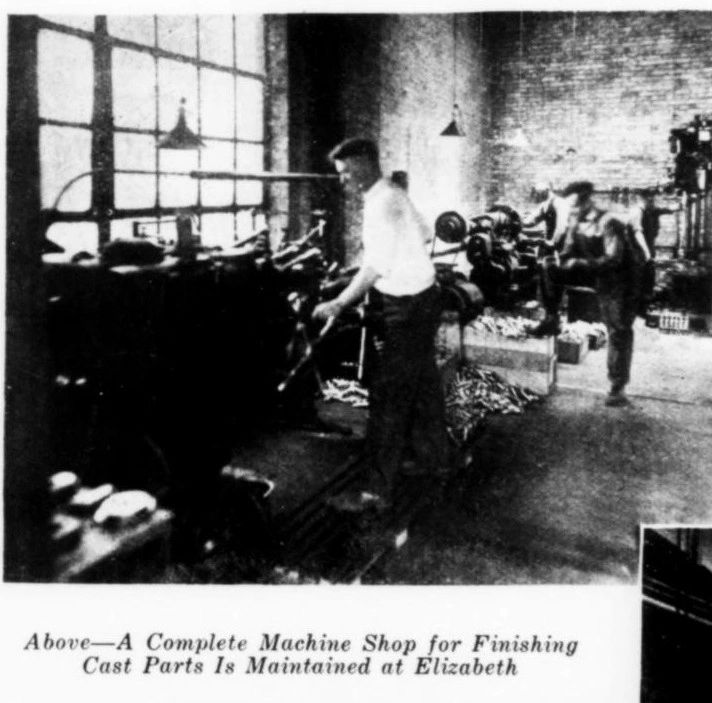
Although naval bells are among the company's best-known products today, E. A. Williams & Son also cast bells for churches, fire departments, lighthouses and other institutions, in addition to an extensive line of brass and bronze industrial castings. By 1927, the company operated two New Jersey facilities. Its original Jersey City foundry specialized in difficult and unusual custom castings, while a second plant in Elizabeth handled larger production work. The Williams family remained unusually connected to the actual craft of founding; successive generations were trained as molders and smelters and understood the work being performed on the foundry floor.
E. A. Williams & Son survived for nearly a century after William Williams established the original foundry. In 1953, the operation was moved from Jersey City to Carlstadt, New Jersey, continuing a business whose origins stretched back to 1857. Today, surviving bells marked E. A. Williams & Son preserve the name of one of New Jersey's long-lived bell and brass foundries. Perhaps the most remarkable part of its history is the origin of that name itself: Eliza Ann Williams, a nineteenth-century widow and skilled foundry worker who kept her husband's foundry alive and, by signing her business dealings simply "E. A.," gave the company the name it would carry for generations.